
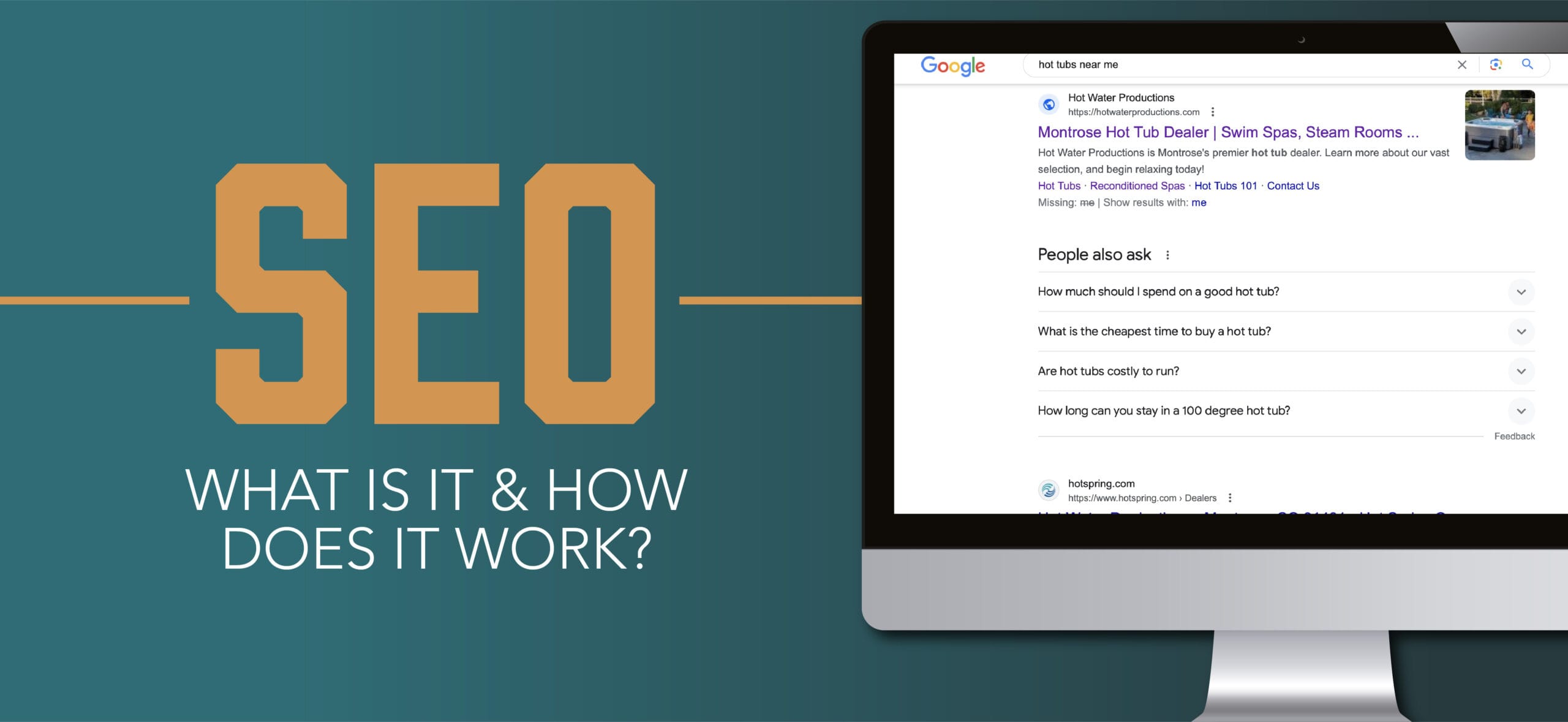

You’ve probably heard that an SEO strategy is one of the most important components of your marketing plan, but you may not know how to capture this elusive concept to increase traffic, engagement and sales.
We’ve broken SEO down to the basics to help you determine how this powerful strategy can fit into your marketing mix.
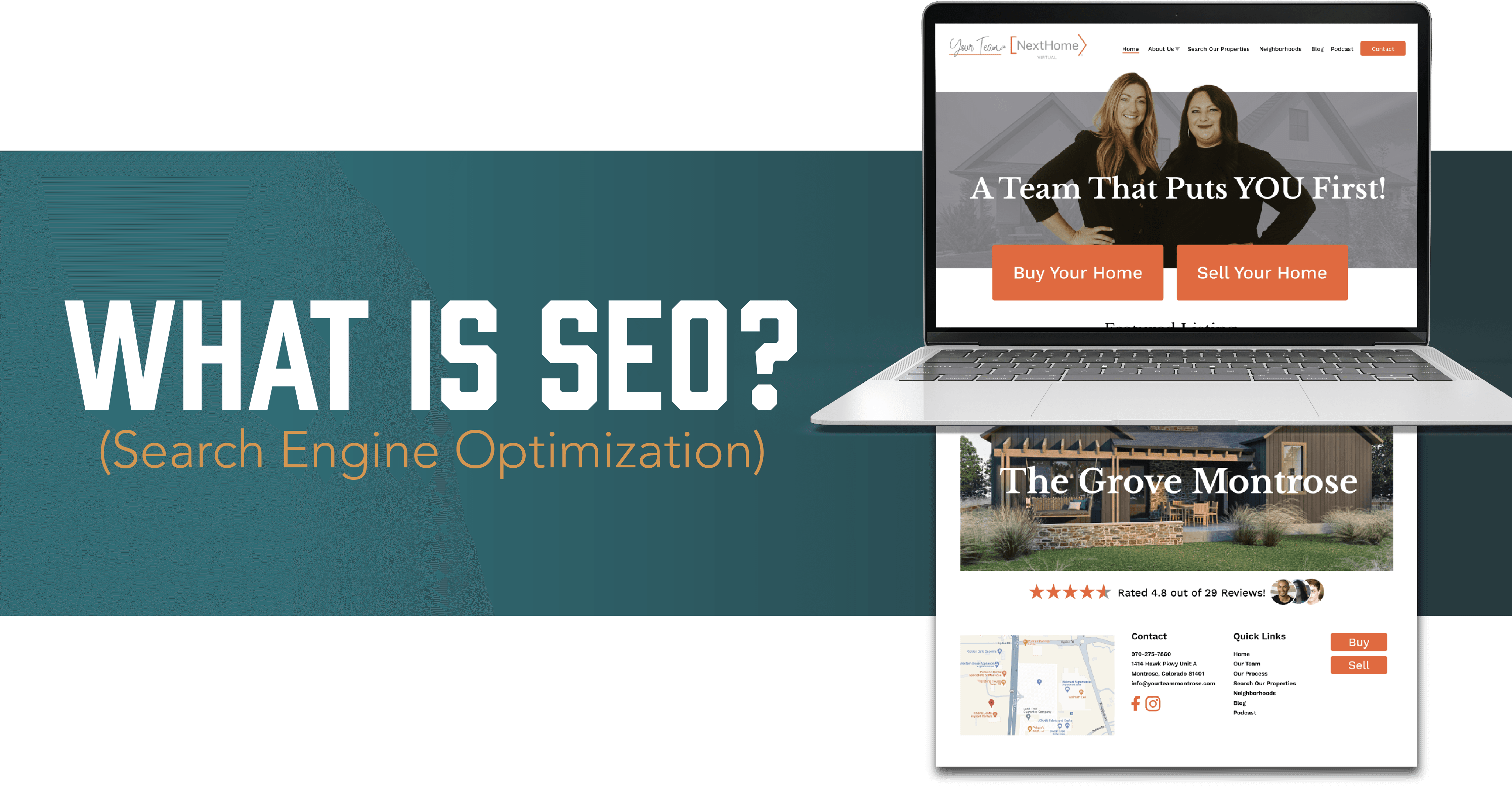 What is SEO?
SEO, a.k.a. Search Engine Optimization, is the magical marketing element that helps determine what people click on when they search the web. The more people click on your site, the more traffic you get, eventually equating to more conversions and sales. Without SEO, your brand has little chance of getting spotted, your products have less chance of being purchased, and fewer folks will walk through your doors.
So, it’s easy, right? You can just set up SEO content and watch the sales fly in. Well, unfortunately, it’s quite a bit more complex than that. Search engines constantly change what it takes to rank at the top of the search results. What worked yesterday might become obsolete with Google’s next update.
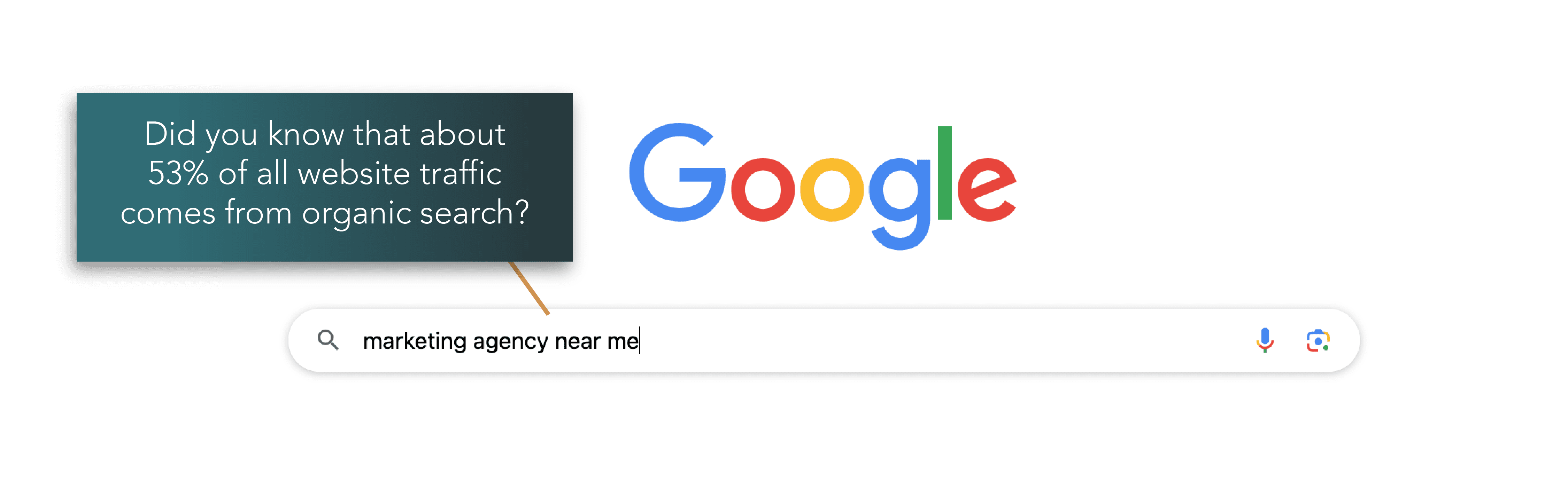
Don’t think any of this matters for your business? Did you know that about 53% of all website traffic comes from organic search?
 Why Does SEO Matter?
SEO helps businesses connect with people who are searching online for their products and services. SEO is a powerful strategy that allows you to get in front of potential customers further into your sales funnel because it attracts traffic from people who are actively in search of what you provide.
Importantly, SEO is an organic search function, which makes it more trustworthy to consumers than an ad or pay-for-play strategy.
Consider these online search statistics:
- Organic search is the top traffic source for websites
- The number one organic search result is 10 times more likely to receive a click compared than the number 10 search result
- The top organic search result has a click-through rate (CTR) of 39.8%, whereas the top paid search result has a CTR of 2.1%
Now that you understand how important SEO is when it comes to getting traffic to your website, are you ready to make SEO work for you?
 HOW SEO WORKS
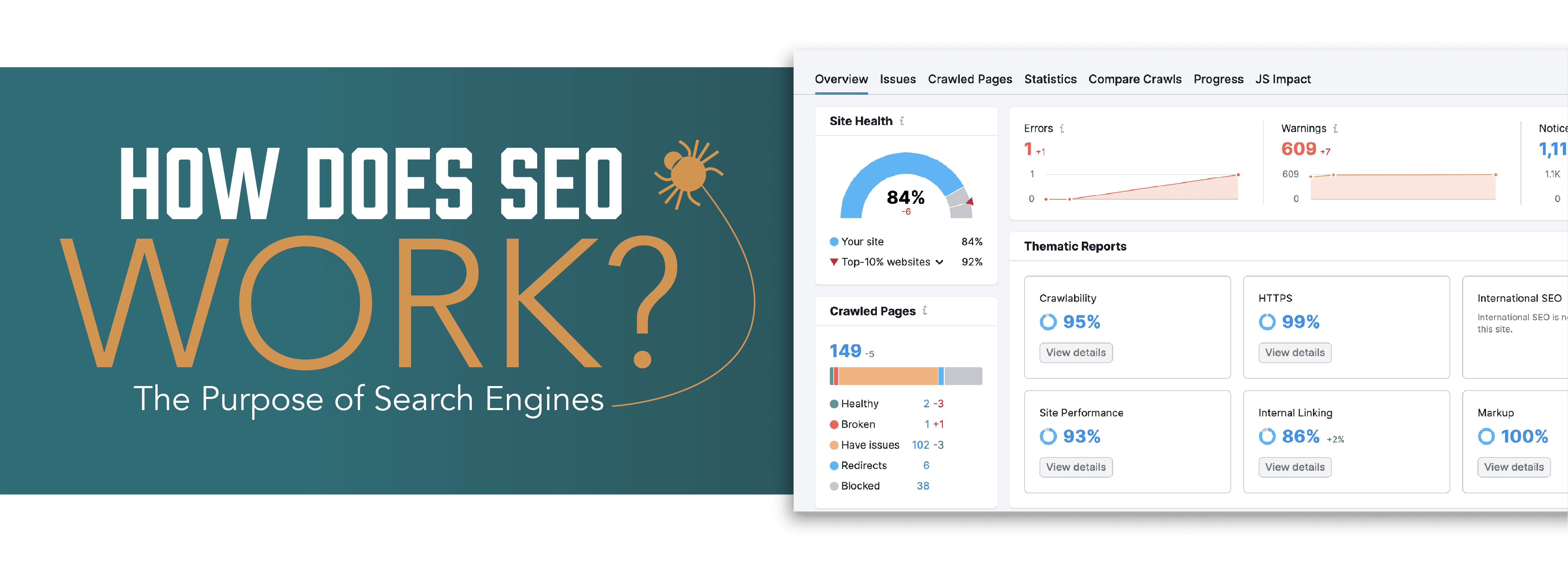
SEO is how search engines rank your content. To understand how SEO works, it is important to understand the purpose of search engines. These resources are constantly scouring the internet to find the most relevant and trustworthy content to provide the best responses to search queries.
To do this, search engines crawl your site. Then, they index the site based on relevance and authority. This means your SEO strategy needs to account for the creation of constant, relevant content that fits your user’s needs, and continual work to build your authority in the field. Search engines want to list content that they know consumers can trust.
Search engines are constantly changing the exact recipe for SEO success, making it essential to have a team that is staying on top of current trends in SEO.
HOW SEO WORKS FOR YOU
An SEO strategy aims to build a constant stream of high-quality leads by generating more traffic to your website. SEO is often ranked as one of the best ways to acquire new customers and organic traffic can be the largest driver of low-cost traffic to your website. 
HOW TO CREATE AN SEO STRATEGY
Now that you know you need SEO to increase traffic and conversion, you need to create a strategy. And the foundation of every good strategy is a well-defined goal.

Here are some examples of goals that can inform an SEO strategy:
- Increase organic traffic
- Increase leads acquired from your website
- Increase onsite sales conversions
- Boost sales from mobile visitors
Once you know where you’re headed, you can set SMART (Specific, Measurable, Achievable, Realistic, Timebound) SEO goals to help you get there. Use specific key performance indicators (KPIs) to quantify and monitor your progress.
KPIs useful for measuring your SEO success can include:
- Search engine ranking
- Keyword ranking
- Click-through rate
- Bounce rate
- Conversion rate
- Number of backlinks
As you set your goals, keep in mind that SEO is a long-term strategy; you will not see results overnight. Rather, it will take up to a year to start seeing the fruits of your efforts, but the work will have been worth it when you do. However, the work doesn’t stop when you start seeing results, SEO is an ongoing strategy that must be constantly updated and refined.
Now that you have defined your goals, you can begin creating your content strategy.

DIFFERENT TYPES OF SEO
There are three different types of SEO that can be incorporated into your SEO strategy:
Onsite optimization, which includes aspects such as:
- Keyword research
- Quality content
- Images
- Internal links
Off-site optimization, which includes aspects such as:
- Backlinks
- Competitor analysis
- PR
- Social media
Technical SEO, which includes aspects such as:
- Sitemap
- Broken links
- Canonical urls
As you sit down to create your SEO strategy, consider how your actions will help you achieve the goals you defined in the previous step. Maybe you’re posting one SEO blog post to achieve higher keyword ranking and taking the time to fix technical issues to improve your bounce rate each month, or maybe you can take on more.
No matter the calendar you lie out, make sure to make it manageable. We often see companies bite off more than they can chew, leaving their SEO strategy in the dust.

TMD Tip: If you focus on just one thing in SEO, create high-quality content that satisfies your potential customer’s search. Remember: Search engines want to provide the best, most relevant content for each search query.
SEO can be an investment in time and understanding, but it makes a big difference in terms of traffic, conversions and sales once it’s set up. The difference between a successful online company and an unsuccessful one often boils down to Google organic search rankings.
One of our expert SEO strategists can help you identify what needs to be done to increase the organic traffic to your website. Contact us to schedule your free discovery call today.


